
What to Look for in Diaphragm Valve Manufacturers in India
Industrial dust collection systems are only as reliable as the components that control them. Among these, diaphragm valve plays a vital role in maintaining efficient pulse jet cleaning, stable compressed air delivery, and uninterrupted bag filter performance. Choosing the right manufacturer isn’t simply about comparing prices; it is about selecting a long-term engineering partner capable of delivering dependable products, technical expertise, and consistent support.
Whether you’re upgrading an existing dust collector, building a new plant, or sourcing components for OEM equipment, selecting the right diaphragm valve manufacturers in India can significantly improve equipment reliability, reduce maintenance costs, and increase operational efficiency.
This guide explains what engineers, maintenance teams, and procurement professionals should evaluate before making their decision.
Quick Answer: What Should You Look for in Diaphragm Valve Manufacturers in India?
When selecting a diaphragm valve manufacturer, consider:
- Proven industry experience
- Product quality and material standards
- Consistent pulse performance
- Technical support
- Spare parts availability
- Manufacturing capability
- Compatibility with dust collection systems
- Long service life
- Energy-efficient operation
- Reliable after-sales service
A manufacturer that excels in these areas can help reduce downtime, improve compressed air efficiency, and extend the life of dust collection equipment.
Why Are Diaphragm Valves So Important?
A diaphragm valve controls the release of compressed air into a pulse jet dust collection system. During reverse pulse jet cleaning, the valve opens rapidly and releases a high-pressure burst of air into the filter bags.
This short pulse removes accumulated dust without interrupting production.
When a valve performs consistently, it helps:
- Maintain low pressure drop
- Improve dust collection efficiency
- Extend filter bag life
- Reduce compressed air consumption
- Minimize maintenance interruptions
- Improve plant productivity
A poorly designed valve, on the other hand, can lead to uneven cleaning, excessive air consumption, frequent maintenance, and higher operating costs.
How Does a Pneumatic Diaphragm Valve Work?
A pneumatic diaphragm valve uses compressed air to rapidly open and close the valve. In pulse jet dust collectors, the valve is triggered by a sequential timer controller or dust collector controller.
The operating sequence is simple:
- Controller sends an electrical signal.
- Solenoid pilot valve activates.
- The diaphragm lifts instantly.
- A powerful pulse of compressed air enters the blow pipe.
- Dust is dislodged from the filter bags.
- The valve closes and prepares for the next cleaning cycle.
This rapid response is essential for maintaining efficient reverse pulse cleaning.
What Should You Evaluate Before Choosing a Diaphragm Valve Manufacturer?
1. Industry Experience Matters
Industrial dust collection applications vary widely across sectors such as cement, steel, pharmaceuticals, food processing, foundries, chemicals, mining, textiles, and power generation.
An experienced diaphragm valves manufacturer understands these operating environments and can recommend suitable products based on:
- Dust characteristics
- Operating pressure
- Air quality
- Pulse frequency
- Ambient conditions
- Maintenance requirements
Manufacturers with decades of engineering expertise often provide more reliable solutions than suppliers focused only on sales.
2. Product Quality and Manufacturing Standards
The quality of the diaphragm directly influences valve performance.
Look for manufacturers using:
- High-quality elastomers
- Precision-machined valve bodies
- Corrosion-resistant materials
- Consistent manufacturing processes
- Strict quality inspections
A durable diaphragm maintains reliable sealing and withstands repeated pulse cycles without premature failure.
3. Fast Response Time
In pulse jet systems, milliseconds matter.
A quality valve should:
- Open quickly
- Deliver full pulse pressure
- Close securely
- Prevent air leakage
Fast response improves dust removal while reducing compressed air waste.
4. Compatibility with Existing Systems
Not every valve fits every dust collector.
Before purchasing, verify compatibility with:
- Tank-mounted systems
- Pulse jet collectors
- Sequential timer controllers
- Dust collector controllers
- Solenoid pilot valves
- Existing compressed air piping
A trusted diaphragm valve supplier will help ensure proper sizing and compatibility rather than recommending a generic replacement.
5. Spare Parts Availability
Industrial maintenance teams cannot afford lengthy shutdowns.
Choose manufacturers offering:
- Replacement diaphragms
- Repair kits
- Solenoid pilot valves
- Springs
- Seals
- Technical documentation
Easy availability of spare parts significantly reduces downtime.
6. Technical Support
Reliable manufacturers provide more than products.
Look for companies that offer:
- Application guidance
- Installation recommendations
- Troubleshooting assistance
- Preventive maintenance advice
- Product selection support
Engineering support often prevents costly installation mistakes.
7. Proven Performance in Industrial Applications
Always ask where the valves are already being used.
Reliable manufacturers typically supply industries including:
- Cement plants
- Steel manufacturing
- Power plants
- Pharmaceutical production
- Food processing
- Chemical plants
- Textile industries
- Mining operations
- Woodworking industries
- OEM dust collector manufacturers
Real-world performance demonstrates product reliability better than marketing claims.
Pneumatic Diaphragm Valve vs Solenoid Diaphragm Valve
Many buyers confuse these two terms.
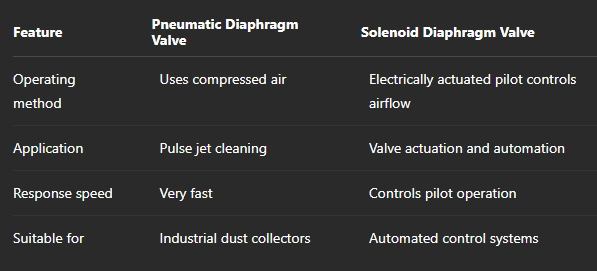
In many pulse jet systems, both work together. The solenoid pilot activates the pneumatic diaphragm valve, producing the compressed air pulse required for cleaning.
Common Applications of Diaphragm Valves
Reliable diaphragm valves are widely used in:
- Dust Collection Systems: For reverse pulse jet cleaning of bag filters.
- Cement Plants: Removing cement dust from production lines.
- Steel Plants: Handling heavy particulate generated during manufacturing.
- Pharmaceutical Industry: Maintaining clean production environments.
- Food Processing: Supporting hygienic dust extraction systems.
- Chemical Plants: Managing airborne process dust safely.
- Mining Operations: Controlling high-volume dust generated during material handling.
- Woodworking Industries: Extracting fine wood dust to improve workplace safety.
Benefits of Choosing the Right Diaphragm Valve Manufacturer
Selecting the right supplier provides measurable operational benefits.
These include:
- Improved pulse jet cleaning efficiency
- Longer diaphragm life
- Reduced compressed air consumption
- Better bag filter performance
- Lower maintenance costs
- Reduced plant downtime
- Improved equipment reliability
- Higher production efficiency
- Faster maintenance support
- Better long-term return on investment
Common Mistakes Buyers Should Avoid
Many industrial buyers focus only on the initial diaphragm valve price, overlooking factors that affect total ownership costs.
Avoid these common mistakes:
- Selecting the cheapest valve available
- Ignoring compatibility with existing systems
- Buying without technical support
- Overlooking spare parts availability
- Choosing suppliers with limited industrial experience
- Ignoring maintenance requirements
- Not checking service history and references
A slightly higher initial investment in a quality valve often results in lower maintenance expenses and longer service life.
Maintenance Tips for Longer Valve Life
Routine preventive maintenance helps maximize valve performance.
Recommended practices include:
- Inspect diaphragms regularly for wear.
- Maintain clean, dry compressed air.
- Check pilot solenoids for proper operation.
- Tighten mounting hardware during scheduled shutdowns.
- Replace worn diaphragms before failure.
- Monitor pulse pressure consistency.
- Keep replacement kits readily available.
Preventive maintenance reduces unexpected downtime and extends equipment life.
Best Practices for Industrial Buyers
When evaluating a new diaphragm valve supplier, prepare a checklist that includes:
- Engineering capability
- Product quality
- Manufacturing experience
- Technical documentation
- Spare parts support
- Delivery reliability
- Product compatibility
- Customer references
- Long-term maintenance support
This approach helps ensure a successful investment rather than simply comparing catalog specifications.
Why Experienced Manufacturers Make a Difference
Industrial dust collection systems operate continuously under demanding conditions. A reliable manufacturer contributes more than hardware by offering engineering knowledge, product consistency, and dependable technical support.
With over 47 years of experience, Maniks has built expertise in designing and manufacturing reverse jet pulse valves, tank mounted valves, sequential timer controllers, diaphragms, and other dust collection components for a wide range of industries. This experience enables industrial buyers to source products that prioritize equipment reliability, energy efficiency, and long service life.
Conclusion
Choosing the right diaphragm valves is about much more than purchasing a replacement component. The right manufacturer can help improve dust collection efficiency, optimize compressed air usage, reduce maintenance costs, and enhance the overall reliability of your industrial operations.
When evaluating diaphragm valve manufacturers in India, focus on engineering expertise, proven product quality, technical support, spare parts availability, and long-term performance instead of price alone. A dependable partner helps ensure your dust collection system continues to operate efficiently while minimizing downtime and maximizing productivity.
Need Expert Guidance for Your Dust Collection System?
Choosing the right diaphragm valve starts with understanding your operating conditions, compressed air requirements, and maintenance goals. If you’re planning a new installation, upgrading an existing pulse jet system, or looking for reliable replacement components, the engineering team at Maniks can help you identify the most suitable solution.
Explore our Tank Mounted Valves range to learn more about high-performance diaphragm valve solutions designed for efficient reverse pulse jet cleaning, long service life, and dependable industrial performance. You can also contact our experts to discuss your application, request technical assistance, or obtain a customized quotation for your dust collection system.