
Pulse Valve: Working, Types and Applications Guide
A pulse valve is a fast-acting valve used in dust collection systems to release compressed air in short bursts, effectively cleaning filter bags and maintaining system efficiency.
What is a Pulse Valve?
A pulse valve, also known as a pulse jet valve or pulse solenoid valve, is an essential component in industrial dust collection systems. It controls the release of compressed air to clean filters by removing accumulated dust.
These valves are commonly used as:
- Dust collector valves
- Pulse valve for dust collector systems
- Dust collector pulse valve units in industrial plants
Pulse Valve Working Principle
A pulse valve operates by releasing a sudden burst of compressed air into the dust collector system, dislodging dust from filter bags.
Step-by-Step Working:
- Compressed air is stored in an air tank
- The pulse solenoid valve receives an electrical signal
- The diaphragm opens rapidly
- A high-pressure air pulse is released
- Dust is removed from filter bags
- The valve closes and pressure is restored
This rapid cycle ensures efficient and continuous filtration.
Types of Pulse Valves
1. Pilot Operated Pulse Valve
- Controlled using a pilot signal
- Suitable for high-pressure systems
- Widely used in industrial applications
2. Direct Acting Pulse Valve
- Operates without a pilot mechanism
- Best for smaller systems
3. Pulse Jet Solenoid Valve
- Electrically controlled for precise operation
- Ensures accurate timing and efficiency
4. Diaphragm Pulse Valve
- Uses a diaphragm for quick air release
- Provides durability and consistent performance
Applications of Pulse Valves
Pulse valves are widely used across industries for dust control and filtration:
- Cement plants
- Steel and metal industries
- Pharmaceutical manufacturing
- Food processing units
- Power generation plants
These industries rely on pulse valve for dust collector systems to maintain air quality and operational efficiency.
Benefits of Using Pulse Valves
- Efficient dust removal
- Increased filter lifespan
- Reduced maintenance costs
- Continuous operation of systems
- Improved environmental compliance
Pulse Valve vs Other Valves
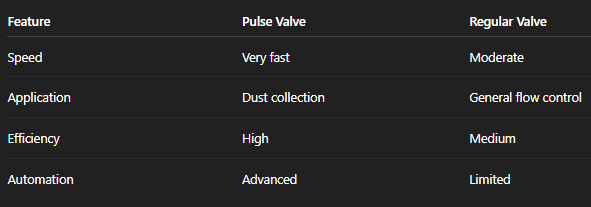
Common Problems and Solutions
- Valve not opening: Check electrical connections and solenoid function
- Weak air pulse: Inspect diaphragm and air pressure levels
- Air leakage: Replace worn-out seals or damaged components
Regular inspection and maintenance help ensure long-term reliability.
Why Choose Maniks?
Maniks is a trusted pulse valve manufacturer delivering high-performance solutions for industrial dust collection systems.
Key Advantages:
- Advanced pilot operated valve technology
- Durable construction for industrial environments
- Efficient and reliable performance
- Designed for dust collector valve applications
- Strong industry expertise and support
Key Takeaways
- A pulse valve is essential for efficient dust collection systems
- Proper selection improves performance and reduces downtime
- Different types serve different industrial needs
- Regular maintenance ensures long-term efficiency
- Choosing the right manufacturer impacts system reliability
FAQs
What is a pulse valve used for?
A pulse valve is used in dust collectors to release compressed air and clean filter bags efficiently.
How does a pulse jet valve work?
It releases short bursts of compressed air to remove dust from filters and maintain airflow.
Which pulse valve is best for dust collectors?
Pilot operated pulse valves are widely preferred for industrial dust collection systems.
Why is maintenance important for pulse valves?
Regular maintenance prevents failures, ensures efficiency, and extends valve life.
Conclusion
A pulse valve is a critical component in modern industrial filtration systems. With the right design, proper selection, and expert support from manufacturers like Maniks, industries can achieve better efficiency, reduced maintenance costs, and improved environmental performance.
Contact us for reliable and high-quality solutions.