
Best Made-in-India Diaphragm Valves
If you run a bag filter or cartridge filter dust collector, you already know what happens when cleaning stops working the way it should. Differential pressure climbs. Fans work harder. Bags blind faster than expected. And somewhere in that chain of problems, a small component is usually the real culprit: the diaphragm valve.
Diaphragm valves are the unsung workhorses of reverse pulse jet cleaning systems. They fire thousands of times a day, every day, and when they fail, the entire dust collection system suffers. Choosing the right diaphragm valve – and maintaining it properly – is one of the highest-leverage decisions a plant engineer can make for equipment reliability and energy efficiency.
This guide walks through what diaphragm valves are, how they work, where they’re used, and how to choose a reliable made-in-India option that won’t leave you troubleshooting compressed air leaks at 2 AM.
What Is a Diaphragm Valve in a Dust Collection System?
A diaphragm valve is a pneumatically operated valve that controls short, sharp bursts of compressed air into the filter bags or cartridges of a dust collector. This burst of air – the “reverse pulse” – knocks accumulated dust off the outside of the filter media so it falls into the hopper below.
The valve itself has three main parts: a rubber or synthetic diaphragm, a pilot solenoid that controls air flow to the diaphragm, and a valve body that connects to the compressed air tank and the blow pipe. When the sequential timer controller sends a signal, the solenoid opens briefly, air pressure flips the diaphragm, and compressed air rushes through the valve into the bags.
It sounds simple. In practice, the quality of the diaphragm material, the machining tolerance of the valve body, and the response time of the solenoid make a measurable difference in how consistently your dust collector cleans itself.
How Does a Diaphragm Valve Work?
Here’s the short version, the kind you’d want if someone asked you on the shop floor:
The valve sits normally closed, held shut by air pressure on top of the diaphragm. When the timer controller triggers the pilot solenoid, it vents that pressure. The pressure differential across the diaphragm forces it to lift instantly, opening a wide port that releases a short, high-volume pulse of compressed air – typically lasting 80 to 150 milliseconds. Once the pulse is delivered, the solenoid closes, pressure re-builds on top of the diaphragm, and it snaps shut again.
This entire cycle happens in a fraction of a second, and it repeats across every valve in the tank, row by row, on a schedule set by the sequential timer. That’s what keeps differential pressure stable across a shift instead of spiking every hour.
Why Diaphragm Valves Matter More Than Most Engineers Realize
A dust collector is only as good as its weakest cleaning cycle. If even a few diaphragm valves are sticking, leaking, or firing late, dust builds up unevenly across the filter bank. Some bags stay clean while others cake up and blind. The fan has to pull harder to maintain airflow, energy consumption rises, and bag life drops.
In cement plants and foundries, where dust loading is heavy and continuous, a weak diaphragm valve can cut filter bag life by months. In food processing and pharmaceutical plants, inconsistent cleaning can affect product quality and compliance, not just energy bills.
Diaphragm valves are a small part with an outsized effect on downtime, maintenance cost, and overall system reliability.
Where Are Diaphragm Valves Used?
Diaphragm valves are core components across almost every industry that runs pulse jet dust collectors or bag filter systems, including:
- Cement plants – clinker cooler vents, raw mill filters, packing plant dust collectors
- Steel and foundries – furnace fume extraction, sand reclamation, shot blasting booths
- Power plants – coal handling, ash handling, boiler flue dust collection
- Pharmaceuticals – tablet coating dust extraction, powder handling booths
- Food processing – flour handling, grain elevators, spice and powder processing
- Chemicals and textiles – process dust extraction, fiber and lint collection
- Mining and woodworking – crusher house dust control, sawdust and wood chip collection
Anywhere compressed air is used to clean filter media, diaphragm valves are doing the work behind the scenes.
Types of Diaphragm Valves Used in Dust Collectors
1. Pneumatic Diaphragm Valve
The standard configuration used in most reverse pulse jet systems. It relies entirely on a compressed air pressure differential to open and close, triggered by a pilot solenoid. Pneumatic diaphragm valves are preferred for their fast response and durability under continuous cycling.
2. Solenoid Diaphragm Valve
This term often refers to the complete assembly – the diaphragm valve body paired with its pilot solenoid coil. The solenoid diaphragm valve is what most engineers mean when they talk about “the pulse valve” on a dust collector, since the solenoid is what actually receives the electrical trigger from the timer controller.
3. Tank Mounted Valve
Designed to mount directly onto the compressed air tank (also called the header pipe), tank mounted valves are the most common configuration in cement, steel, and heavy industrial applications because they minimize air travel distance and pressure drop, delivering a sharper, more effective pulse.
Comparison: Key Factors When Selecting a Diaphragm Valve
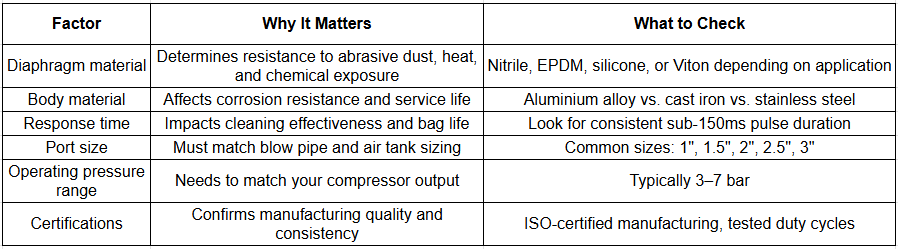
Benefits of Using High-Quality Diaphragm Valves
Fewer unplanned shutdowns. A reliable diaphragm valve reduces the chance of a stuck-open valve draining your compressed air tank or a stuck-closed valve leaving bags dirty.
Lower compressed air consumption. Compressed air is one of the most expensive utilities in a plant. A diaphragm valve with a tight seal and fast, complete closure prevents constant air leakage, which directly reduces compressor load and energy costs.
Longer filter bag life. Consistent, full-strength pulses clean bags evenly, reducing abrasion from over-pulsing and preventing dust cake buildup from under-pulsing.
Reduced maintenance labor. Durable diaphragm materials and precision-machined valve bodies mean fewer valve replacements and less time spent troubleshooting cleaning cycle failures.
Better regulatory compliance. Stable filtration performance helps plants consistently meet emission norms without last-minute fixes before inspections.
Common Applications of Diaphragm Valves in Industrial Settings
- Bag filter dust collectors in cement grinding and packing units
- Cartridge filter collectors in pharmaceutical powder handling
- Fume extraction systems in foundries and steel melting shops
- Silo top filters and bin vent filters
- Central dust collection systems in woodworking and furniture units
- Pneumatic conveying systems requiring periodic filter cleaning
Maintenance Tips for Longer Diaphragm Valve Life
Keeping diaphragm valves running reliably doesn’t require complex tools – it requires a consistent routine.
Check compressed air quality regularly. Moisture and oil contamination are the biggest reasons diaphragms degrade early. A properly maintained air dryer and filter upstream of the tank protects every valve downstream.
Inspect diaphragms during scheduled shutdowns. Look for cracking, hardening, or loss of elasticity. A diaphragm that’s gone stiff won’t seal completely, even if it still “works.”
Test solenoid response time. A sluggish solenoid delays the pulse and weakens cleaning. If you notice differential pressure creeping up despite normal cleaning cycles, check solenoid timing first.
Avoid over-tightening during reassembly. Diaphragm valve bodies are precision-fit. Over-torquing bolts during a diaphragm replacement can warp the seat and cause premature leaks.
Keep a spare diaphragm kit on hand. Since diaphragm valves fire continuously, they’re wear items, not lifetime components. Having spares on the shelf avoids production delays waiting for replacement parts.
Buying Considerations Before You Purchase
Before finalizing a diaphragm valve supplier, it helps to look past price alone and consider the full picture:
Match the valve to your dust load. Heavy dust environments like cement and foundries need diaphragm valves built for continuous, high-frequency cycling, not lighter-duty valves designed for intermittent use.
Confirm diaphragm material compatibility. If your process involves high temperatures, oil mist, or corrosive gases, standard nitrile diaphragms may degrade quickly. Ask your diaphragm valve manufacturer about material options for your specific conditions.
Check compatibility with your existing timer controller. A mismatch between solenoid voltage or response characteristics and your sequential timer controller can cause erratic cleaning cycles.
Ask about tested duty cycles. A reputable diaphragm valves manufacturer should be able to share cycle-life data, not just general claims of durability.
Evaluate after-sales support. Dust collection systems run continuously in most plants. A diaphragm valve supplier who can provide fast replacement parts and technical guidance saves real downtime when something goes wrong.
Common Mistakes to Avoid
Choosing valves based on price alone. A cheaper diaphragm valve that fails in six months costs more in downtime, labor, and lost production than a well-made one that runs for years.
Ignoring compressed air quality. Even the best diaphragm valve will fail early if it’s constantly exposed to moisture-laden or oily compressed air.
Mixing valve brands without checking compatibility. Different manufacturers use different port dimensions and diaphragm geometries. Mixing brands across a tank without verifying fit can cause uneven pulse pressure.
Delaying diaphragm replacement. Waiting until a valve fails completely, rather than replacing diaphragms proactively during scheduled maintenance, leads to unplanned production stoppages.
Oversizing or undersizing valve ports. A port size mismatched to your blow pipe reduces pulse effectiveness, regardless of how good the valve itself is.
Industry Best Practices for Dust Collector Valve Systems
Experienced plant engineers tend to follow a few consistent habits: they standardize on a single trusted diaphragm valve manufacturer across the plant to simplify spares inventory, they log differential pressure trends to catch valve degradation early rather than reactively, and they pair diaphragm valve maintenance with sequential timer controller checks, since the two systems work as a pair.
Preventive maintenance schedules that include quarterly diaphragm inspection, rather than run-to-failure approaches, consistently show lower total cost of ownership across a dust collector’s operating life.
Frequently Asked Questions
1. What is a diaphragm valve used for in dust collectors? A diaphragm valve controls short bursts of compressed air used to clean filter bags or cartridges in a pulse jet dust collector, removing accumulated dust so airflow and filtration efficiency stay consistent.
2. How long does a diaphragm valve typically last? Service life depends on cycling frequency, air quality, and diaphragm material, but well-made diaphragm valves in properly maintained systems commonly run for several years before the diaphragm needs replacement.
3. What’s the difference between a pneumatic diaphragm valve and a solenoid diaphragm valve? A pneumatic diaphragm valve refers to the valve body that opens using air pressure differential. A solenoid diaphragm valve typically refers to the complete assembly, including the electrically triggered solenoid pilot that controls the pneumatic action.
4. How do I know if my diaphragm valve needs replacement? Watch for rising differential pressure despite normal cleaning cycles, visible air leaks from the valve body, weak or inconsistent pulses, or a diaphragm that feels stiff or cracked during inspection.
5. What affects diaphragm valve price? Diaphragm valve price is influenced by port size, body material, diaphragm compound, certification standards, and order volume. Heavy-duty valves built for continuous industrial cycling typically cost more than lighter-duty versions, but they cost less over their working life.
6. Can diaphragm valves be used in high-temperature applications? Yes, but the diaphragm material needs to be matched to the temperature range. Standard nitrile diaphragms suit moderate conditions, while high-temperature applications often need specialized compounds rated for higher heat exposure.
7. How often should diaphragm valves be inspected? A quarterly visual and functional inspection is a reasonable baseline for most industrial dust collectors, with more frequent checks for high-dust-load environments like cement and foundry applications.
8. Are made-in-India diaphragm valves as reliable as imported ones? Established Indian diaphragm valve manufacturers with decades of engineering experience produce valves tested to the same duty-cycle and pressure standards as imported alternatives, often with faster lead times and more accessible after-sales support for domestic plants.
Conclusion
Diaphragm valves may be small components, but they carry a disproportionate share of responsibility for how well your dust collection system performs. A reliable diaphragm valve keeps differential pressure stable, protects filter bag life, reduces compressed air waste, and cuts down on the kind of unplanned maintenance that eats into production schedules.
Whether you’re specifying valves for a new installation or replacing worn-out units on an existing tank, choosing a proven, made-in-India diaphragm valve manufacturer with real industrial experience makes a measurable difference to long-term reliability.
Looking for diaphragm valves built for continuous industrial duty? Maniks has been engineering reliable dust collection components for over 47 years, serving cement, steel, pharmaceutical, power, and manufacturing plants across India. Explore our range of tank mounted diaphragm valves, or get in touch with our technical team for help selecting the right valve for your dust collector, sizing guidance, or a quotation tailored to your system.