
Top Industrial Applications of Diaphragm Valves
Dust collection systems are essential in industries where manufacturing, processing, crushing, grinding, conveying, or material handling generates airborne dust. A bag filter or cartridge dust collector can only maintain its performance when the accumulated dust is removed from the filter media at regular intervals.
This is where diaphragm valves become important.
In reverse pulse jet dust collectors, diaphragm valves release short bursts of compressed air to clean filter bags or cartridges. Their opening speed, sealing performance, diaphragm quality, and compatibility with the compressed-air system can directly affect cleaning effectiveness and maintenance requirements.
Modern industrial plants use diaphragm valves across applications ranging from cement and steel manufacturing to pharmaceuticals, food processing, chemicals, mining and woodworking.
But where exactly are these valves used, and why are particular diaphragm valve configurations suitable for dust collection?
Let’s explore the major industrial applications.
What Are Diaphragm Valves Used for in Dust Collection?
A diaphragm valve used in a dust collection system controls the release of compressed air during reverse pulse cleaning.
The basic operating sequence is:
- Dust accumulates on the filter bags or cartridges.
- A sequential timer controller sends an electrical signal to the valve’s pilot solenoid.
- The pilot mechanism changes the pressure acting on the diaphragm.
- The main diaphragm opens rapidly.
- A high-volume burst of compressed air enters the blowpipe.
- The air pulse flexes the filter media and dislodges accumulated dust.
- The diaphragm closes and the system moves to the next cleaning sequence.
Maniks describes its pulse valves as being operated through an integral solenoid pilot, which quickly exhausts trapped air above the diaphragm to enable fast opening of the main valve.
This makes the valve an important part of the relationship between compressed air, pulse timing and filter cleaning efficiency.
Why Are Diaphragm Valves Important in Industrial Dust Collectors?
A dust collector may contain hundreds or even thousands of filter bags or cartridges. If cleaning pulses are weak, delayed or inconsistent, dust can progressively accumulate on the filter media.
This can contribute to:
- Increasing differential pressure
- Reduced airflow
- More frequent filter maintenance
- Higher compressed-air consumption
- Uneven filter cleaning
- Premature filter media replacement
- Increased operational interruptions
The valve therefore needs to deliver repeatable pulse performance throughout continuous operating cycles.
For this reason, industrial buyers should consider more than simply the diaphragm valve price. Valve size, diaphragm material, operating pressure, coil voltage, installation configuration, compressed-air quality and availability of replacement parts can all influence long-term operating performance.
8 Major Industrial Applications of Diaphragm Valves
1. Cement Manufacturing and Bag Filter Systems
Cement plants generate significant amounts of particulate matter during raw material processing, grinding, clinker handling, cement milling, packing and material transfer.
Bag filters and other dust collection equipment are therefore installed at multiple points throughout a cement plant.
Diaphragm valves are used in these systems to provide the compressed-air pulses required for filter cleaning.
Typical applications include:
- Raw mill dust collectors
- Cement mill filters
- Clinker cooler filtration
- Crusher dust collectors
- Packing plant filters
- Material transfer points
- Silo and hopper ventilation
- Coal and alternative-fuel handling systems
The valve needs to withstand frequent cycling and industrial operating conditions. Maniks manufactures tank-mounted diaphragm valves specifically for dust collectors and lists cement among the industries served by its products.
2. Steel Plants and Foundries
Steel manufacturing and foundry operations involve processes such as melting, casting, grinding, material handling and surface treatment that can generate substantial dust and fumes.
Dust collectors used in these environments depend on reliable pulse cleaning to maintain airflow through their filter media.
Diaphragm valves can be used in:
- Furnace fume extraction systems
- Bag filters
- Material handling dust collectors
- Grinding systems
- Sand reclamation systems
- Shot-blasting filtration
- Crusher and screening systems
- Foundry ventilation systems
Heavy-duty operation makes diaphragm durability particularly important in these applications.
Maniks also manufactures spare diaphragms for reverse-jet pulse valves used in bag filters, including applications typically found in cement and steel plants. Different diaphragm materials such as polyester, neoprene and Viton are available for application-specific requirements.
3. Pharmaceutical Manufacturing
Pharmaceutical manufacturing requires controlled handling of powders, granules and other particulate materials.
Dust extraction systems can be installed around:
- Powder handling equipment
- Milling operations
- Blending systems
- Tablet manufacturing areas
- Material transfer systems
- Packaging operations
In these applications, dust collection performance needs to be consistent, while equipment selection must also consider the specific operating environment.
A suitable pneumatic diaphragm valve can provide controlled compressed-air pulses for cleaning filter elements without requiring a complicated mechanical cleaning mechanism.
For pharmaceutical facilities, engineers should also consider the construction materials, diaphragm compatibility, compressed-air quality and cleaning requirements when selecting valves.
4. Food Processing and Grain Handling
Food processing facilities can generate dust from flour, grains, spices, starches, powders and other dry materials.
Dust collection systems may be installed around:
- Flour mills
- Grain handling equipment
- Conveyors
- Mixers
- Grinding equipment
- Powder transfer points
- Packaging machinery
- Storage and loading systems
Diaphragm valves can be used to operate the pulse-cleaning system of bag filters and cartridge collectors installed in these areas.
The correct valve selection should take into account the operating environment, compressed-air conditions, valve materials and maintenance requirements.
Maniks lists food processing among the industrial applications for its tank-mounted diaphragm valve solutions.
5. Chemical Processing Plants
Chemical plants may handle powders, granules and other materials that require controlled dust extraction.
Dust collectors can be used around:
- Powder transfer systems
- Reactors and processing equipment
- Drying systems
- Material handling lines
- Bagging stations
- Grinding and pulverizing equipment
In such environments, selecting the right diaphragm material is particularly important.
The diaphragm is exposed to repeated mechanical cycling, while the surrounding environment may involve temperature variations, chemicals or aggressive industrial conditions.
For this reason, a diaphragm valve supplier should be able to provide application-specific material options rather than offering only one standard diaphragm specification.
Maniks manufactures spare diaphragms in materials including polyester, neoprene and Viton for different operating requirements.
6. Power Plants and Coal/Ash Handling
Power generation facilities can have extensive dust collection requirements, particularly around coal handling, ash handling and material transfer operations.
Diaphragm valves can be incorporated into pulse-jet cleaning systems serving:
- Coal conveyors
- Crushers
- Transfer towers
- Ash handling systems
- Silo filters
- Material unloading points
- Baghouse dust collectors
Because these systems can operate continuously, valve reliability and replacement-part availability are important considerations.
A reliable solenoid diaphragm valve assembly can work with a sequential controller to provide timed cleaning pulses across multiple filter rows.
7. Mining and Mineral Processing
Mining and mineral processing operations generate dust during extraction, crushing, screening, conveying and processing.
Dust collectors may be installed at:
- Crushers
- Screens
- Conveyors
- Transfer points
- Grinding mills
- Storage silos
- Loading and unloading areas
In these applications, diaphragm valves support the reverse pulse cleaning process and help keep filter media operational.
The correct valve size and air capacity should be selected according to the dust collector design rather than simply replacing an existing valve based on appearance.
8. Woodworking and Other Industrial Manufacturing
Woodworking operations generate fine dust and chips during cutting, sanding, routing and other processes.
Industrial dust collectors use filter elements that periodically need cleaning. Pulse-operated diaphragm valves can provide the compressed-air pulses required to clean these filters.
Similar applications can be found in other manufacturing environments involving:
- Dry powders
- Fine particles
- Fibres
- Granular materials
- Process dust
This makes diaphragm valves useful across a broad range of industrial filtration systems.
Pneumatic Diaphragm Valve vs Solenoid Diaphragm Valve
The terms pneumatic diaphragm valve and solenoid diaphragm valve are sometimes used interchangeably, but they describe different aspects of valve operation.
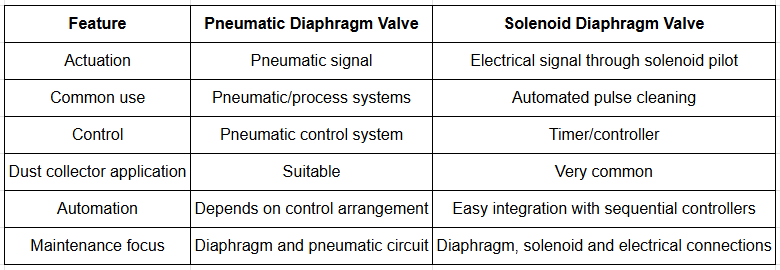
In a typical pulse-jet dust collector, the electrical signal activates the solenoid pilot, while the compressed-air pressure difference operates the main diaphragm.
How to Select Diaphragm Valves for a Dust Collection System
Choosing the right valve requires more than checking the connection size.
1. Check the Valve Size
The valve should be compatible with the compressed-air tank/header and blowpipe arrangement.
Using an incorrectly sized valve can affect pulse delivery and overall cleaning performance.
2. Check Operating Pressure
Confirm that the valve is suitable for the compressed-air pressure available at the dust collector.
The actual operating conditions should be considered rather than selecting a valve solely from a catalogue.
3. Select the Correct Diaphragm Material
Diaphragm material affects service life and application suitability.
Depending on the application, manufacturers may offer materials such as:
- Polyester
- Neoprene
- Viton
Maniks specifically provides application-specific spare diaphragms in different materials.
4. Confirm Coil Voltage
The solenoid coil must match the control system.
Maniks’ tank-mounted valve specifications include 230 VAC, 110 VAC and 24 VDC options, with moulded coils, Class H insulation and IP65 DIN socket protection listed on the product page.
5. Consider Pulse Frequency
A valve operating repeatedly throughout the day requires a diaphragm and pilot assembly designed for frequent cycling.
6. Check Spare-Part Availability
A diaphragm valve is easier to maintain when replacement diaphragms, coils and other relevant spares are readily available.
For large dust collectors, local availability can be particularly useful because waiting for imported replacement parts can extend maintenance downtime.
What Determines Diaphragm Valve Price?
There is no single diaphragm valve price applicable to every industrial application.
Pricing can vary according to:
- Valve size
- Valve construction
- Diaphragm material
- Coil voltage
- Valve configuration
- Quantity required
- Application requirements
- Spare-part requirements
- Customization
For example, a standard replacement valve for a smaller dust collector may have different specifications and pricing from a large tank-mounted valve intended for a high-capacity industrial baghouse.
For procurement teams, it is better to compare total application suitability and lifecycle requirements rather than selecting a valve based only on initial purchase price.
Why Tank-Mounted Diaphragm Valves Are Used in Dust Collectors
Tank-mounted diaphragm valves are installed directly on the compressed-air tank or header assembly.
This configuration is particularly useful in pulse-jet dust collectors because the valve is positioned close to the stored compressed air that needs to be released during the cleaning cycle.
Maniks’ TMEP tank-mounted diaphragm valve range is designed for dust collector systems, air pulse cleaning systems, industrial filtration units and tank discharge/pressure-control applications.
Key characteristics listed by Maniks include:
- Tank-mounted configuration
- Dual diaphragm design
- Solenoid pilot operation
- Leak-resistant sealing
- Aluminium body construction
- Easy installation and maintenance
- Compatibility with pneumatic systems
Common Diaphragm Valve Problems in Dust Collection Systems
Even a properly specified valve can experience problems if the surrounding system is not maintained correctly.
Weak or incomplete pulses
Possible causes include inadequate compressed-air pressure, blocked passages, diaphragm wear or pilot problems.
Air leakage
Continuous leakage may indicate diaphragm deterioration, sealing problems or incorrect assembly.
Valve not opening
Electrical connection issues, incorrect coil voltage, pilot malfunction or diaphragm problems can prevent proper operation.
Rapid diaphragm failure
This can result from unsuitable diaphragm material, poor compressed-air quality, excessive cycling or incorrect installation.
Uneven filter cleaning
If individual valves do not operate consistently, some filter rows may receive insufficient cleaning.
Regular inspection of diaphragms, pilot assemblies, electrical connections and compressed-air quality can help reduce unexpected failures. Maniks also recommends maintaining clean, dry compressed air and inspecting diaphragms and solenoids as part of pulse valve maintenance.
Why Choose an Experienced Diaphragm Valve Manufacturer?
For industrial dust collection applications, the manufacturer is not simply supplying a valve body. The supplier’s understanding of valve operation, diaphragm materials, pulse cleaning and replacement parts can influence the reliability of the complete system.
When evaluating diaphragm valve manufacturers in India, industrial buyers can compare:
- Manufacturing experience
- Product range
- Valve size availability
- Diaphragm material options
- Electrical specifications
- Spare-part availability
- Technical support
- Application experience
- Customization capability
- After-sales service
Maniks has more than 47 years of industry experience and manufactures tank-mounted valves, pulse valves, sequential controllers and spare diaphragms for dust collection applications. Its product range is supported by application-specific spare diaphragms and other reverse-jet pulse valve components.
Quick Buyer Checklist for Industrial Diaphragm Valves
Before placing an order with a diaphragm valve supplier, confirm:
- Required valve size
- Tank/header connection
- Operating air pressure
- Compressed-air quality
- Coil voltage
- Operating temperature
- Diaphragm material
- Pulse frequency
- Installation configuration
- Availability of replacement diaphragms
- Availability of solenoid/pilot spares
- Manufacturer’s technical support
This checklist can prevent simple specification mismatches that later result in installation or maintenance problems.
Frequently Asked Questions
1. What are diaphragm valves used for in dust collection systems?
Diaphragm valves are used to release short bursts of compressed air for cleaning filter bags or cartridges in reverse pulse jet dust collectors. They help remove accumulated dust from the filter media and maintain effective airflow.
2. Which industries use diaphragm valves?
Diaphragm valves are commonly used in dust collection applications across cement, steel, foundries, pharmaceuticals, food processing, chemicals, power generation, mining, woodworking and other manufacturing industries.
3. What is a pneumatic diaphragm valve?
A pneumatic diaphragm valve uses compressed air to actuate a flexible diaphragm. In dust collection systems, the pneumatic action allows the valve to open rapidly and release compressed air for filter cleaning.
4. What is a solenoid diaphragm valve?
A solenoid diaphragm valve uses an electrically operated solenoid pilot to control the main diaphragm valve. In pulse-jet dust collectors, the solenoid is typically triggered by a sequential timer controller.
5. How do I choose the right diaphragm valve?
Consider valve size, compressed-air pressure, coil voltage, diaphragm material, temperature, pulse frequency, installation configuration and compatibility with the existing dust collector.
6. Does diaphragm valve price depend on valve size?
Yes. Diaphragm valve price can vary depending on valve size, materials, coil specification, configuration, quantity and application requirements. Industrial buyers should compare the complete specification rather than price alone.
7. How often should a dust collector diaphragm valve be maintained?
Maintenance frequency depends on operating conditions, pulse frequency, compressed-air quality and application. Regular inspection of diaphragms, pilot components, connections and air supply can help identify problems before they affect dust collector performance.
8. Where can I buy industrial diaphragm valves in India?
Industrial buyers can source diaphragm valves from an experienced manufacturer or supplier that can provide suitable valve specifications, application guidance and replacement parts. Maniks supplies tank-mounted diaphragm valves and related dust collection components for industrial applications.
Conclusion
Diaphragm valves are critical components in reverse pulse jet dust collection systems, particularly where continuous filter cleaning is required. Their applications extend across cement, steel, foundries, pharmaceuticals, food processing, chemicals, power plants, mining, woodworking and other industrial operations.
For reliable performance, selecting a valve should involve more than comparing diaphragm valve price. Valve size, diaphragm material, operating pressure, coil voltage, pulse frequency, installation configuration and spare-part availability all deserve attention.
For plants looking for an experienced diaphragm valve supplier or diaphragm valves manufacturer in India, Maniks offers tank-mounted valve solutions along with pulse valves, sequential controllers and spare diaphragms for dust collection applications.
Need help selecting the right diaphragm valve for your dust collector? Contact us for application guidance and suitable valve solutions.